Category: Education

  • From Village to Varsity: How PHII’s Scholarship Protocol Is Rewriting the Story

    From Village to Varsity: How PHII’s Scholarship Protocol Is Rewriting the Story

    Every year, hundreds of children sit in PHII classrooms not because their families can afford it but because a structural commitment built into every school we operate ensures that inability to pay is never the reason a child misses an education. This is the story of how that commitment works and what it produces.
    Who the Scholarships Serve

    PHII’s scholarship protocol targets three groups facing the highest risk of educational exclusion across Cameroon’s communities: orphans and children in child-headed households who have lost parental income entirely; internally displaced persons whose families were uprooted by conflict in the Anglophone regions and arrived in new communities with nothing; and children from verified low-income households where school fees compete directly with food, rent, and survival. For each group, the protocol provides either a full scholarship covering tuition, materials, and uniform or a partial scholarship that reduces fees to a level the household can sustain without sacrificing basic needs.

    “Before PHII’s school came, I had already decided my daughter would stop after primary. I had no choice. Now she is in Form Four and wants to be a nurse.” Father of scholarship recipient, Northwest Region

    The Numbers Behind the Commitment

    • 400+: Scholarships awarded annually across all five campuses
    • 100%: Of scholarship recipients complete the academic year once enrolled
    • 11 years : Of uninterrupted scholarship provision since PHII’s first school opene

    Not Charity. Structure.

    What distinguishes PHII’s approach from a traditional scholarship programme is that it requires no external campaign to sustain it. The protocol is embedded in the school’s budget from the start of every academic year. It does not depend on a fundraising season, a donor’s mood, or a grant cycle. It simply exists — as part of what a PHII school is and how it operates. This structural approach means children do not arrive mid-year to find that the scholarship fund has been exhausted. It means teachers do not face the awkward task of turning away a child whose family fell behind on fees. And it means the community trusts the school — because the school has never broken its promise.
    Emergency Provisions

    Life in Cameroon’s communities does not follow academic calendars. A father loses his job in October. A mother falls ill in February. A household that was managing fees in September can no longer manage them by March. PHII’s scholarship protocol includes an emergency provision specifically designed for mid-year household crises — allowing a child who was paying fees to be reclassified as a scholarship recipient without losing their place in school. No interruption. No humiliation. No child left behind because of something that happened to their family.

    “The school that keeps a child in their seat through the worst year of their family’s life is the school that earns a community’s trust for a generation.”

    — Rev. Celestine Meh Chu, Founder, PHII

    What Comes After the Scholarship

    PHII tracks scholarship recipients beyond the year of support. The data tells a consistent story: children who receive scholarship support in a critical year — the year a family crisis would otherwise have pulled them out — go on to complete their secondary education at the same rate as fee-paying peers. Several have gone on to university. One is currently completing a degree in medicine. Another has returned to her community as a primary school teacher. The scholarship did not give them their future. It simply refused to take it away.
     

  • How Five Schools Changed Five Communities

    How Five Schools Changed Five Communities

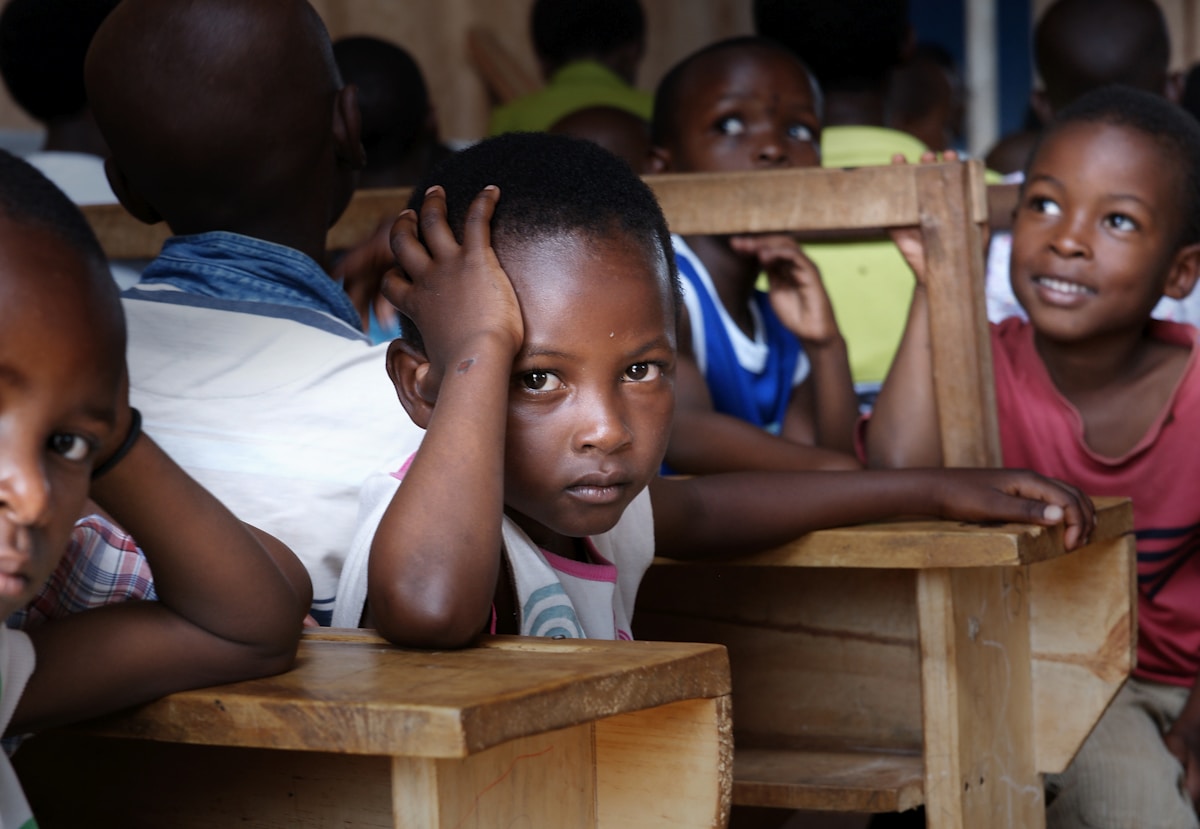
    Children in classroom

    How Five Schools Changed Five Communities

    A ground-level account of PHII’s education initiative across Cameroon’s Centre and Northwest Regions — and what happens when a school becomes the heartbeat of a community.

    In 2013, the village of Mengoeng had no secondary school within walking distance. Families faced an impossible choice: keep children at home or send them — often daughters first — into distant towns where costs, risks, and distances were prohibitive. For most, the answer was neither. It was simply: stop.

    That year, Potter’s House Initiatives Inc. broke ground on its first school. What followed over the next eleven years was not a single project but a compounding institutional commitment — five schools, five communities, and a quiet but measurable transformation in the educational landscape of rural Cameroon.


    The Numbers Behind the Story

    1,500+

    Pupils enrolled annually across all five school campuses

    ~100

    Dignified jobs created, the majority held by women

    400+

    Scholarships awarded to orphans, IDPs, and low-income families

    Beyond Classrooms: What a School Actually Does

    The conventional metric for measuring a school’s impact is enrolment. PHII uses a different one: what changes in the community when the school is there?

    In each of the five communities where PHII schools operate, the pattern has been consistent. Within two years of opening, school enrolment of girls increases. Within four years, local parents who previously migrated to cities for work begin returning — because their children no longer need to. Within five years, the school has become the de facto community centre: the venue for village meetings, the site of adult literacy programmes, the anchor around which the community reorganises its shared life.

    “Before the school, we had no reason to stay. Now we have every reason.”

    — Parent, Mengoeng Village, Centre Region

    The Scholarship Protocol

    Embedded within each school’s operating model is a scholarship protocol — not a separate programme, but a structural commitment. A fixed percentage of enrolment capacity in each school is reserved for children who cannot pay fees: orphans, internally displaced persons, children from households below a verified income threshold.

    • Full scholarships cover tuition, materials, and uniform for the most vulnerable cases.
    • Partial scholarships reduce the fee burden to a level families can sustain without sacrificing food security.
    • Emergency provisions allow the protocol to respond to sudden household crises — a death, a job loss, a displacement event — mid-year without removing the child from school.

    The result is a school that does not merely serve those who can afford it — but anchors its mission in those who cannot.

    Students in a classroom in Africa
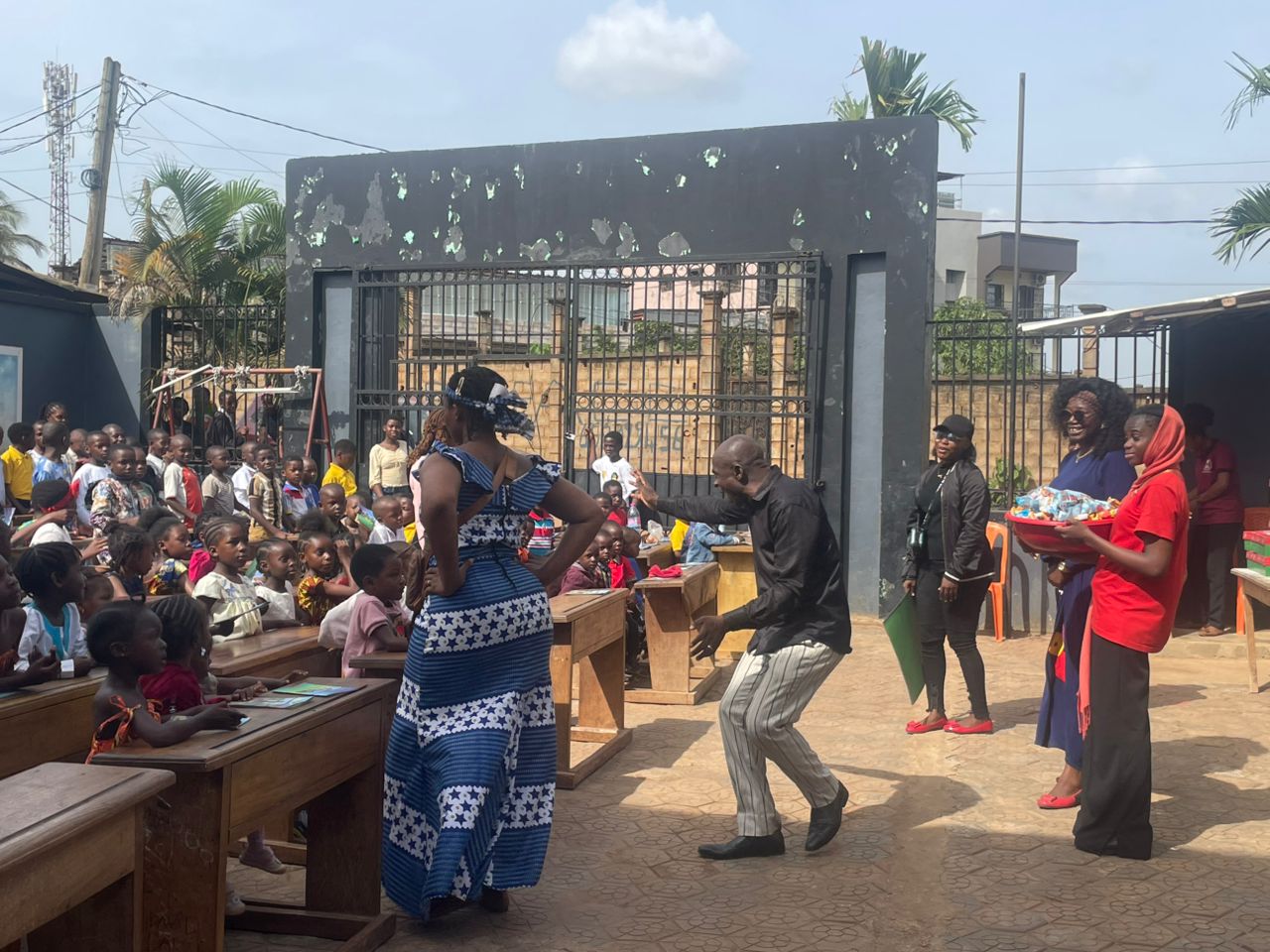
    Students at one of PHII’s five school campuses during the 2025 academic year.

    The Women Behind the Schools

    Of the approximately 100 jobs created across the five campuses, the majority are held by women. This is not incidental. It reflects a deliberate hiring philosophy rooted in PHII’s conviction that sustainable community transformation is inseparable from the economic empowerment of women.

    Teachers, administrators, cooks, cleaners, care workers — these are roles that have given women in each of the five communities a structured income, professional identity, and position of authority that extends into the community beyond school hours. The teacher who leads a classroom also leads a household differently. The administrator who manages school records also manages community expectations differently.


    What Comes Next

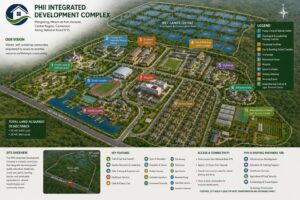
    PHII’s education initiative does not end at five schools. The PHII Integrated Development Complex — currently being established on 70 hectares in Cameroon’s Centre Region — includes within its master plan a full Bilingual Christian School Complex designed to serve both day and boarding students, and a Vocational Institute to address the gap between formal education and economic participation.

    The schools built over the last eleven years were proof of concept. The complex is the scale-up. And the communities transformed in the first phase are now the evidence base for what becomes possible in the next.

    “Education is not a gift PHII gives to communities. It is a structure communities build together — and that, once built, no one can take away.”

    — Rev. Celestine Meh Chu, Founder, Potter’s House Initiatives Inc.